Monday, February 24, 2014

a moment in the day: noni


I hold Noni's hand, standing by the hospital bed in her living room, where she's come home to die. It's warm, and I worry that I'm making her warmer by holding her hand, but she doesn't ask me to let go. She lies on her back, slightly propped up, eyes closed, breathing in the oxygen that comes from the small tube set just under her nose. Mostly sleeping. The hospice nurse says Noni asked for, and was given, a pill to help her sleep about an hour ago, which means my grandmother's pretty out of it for my goodbye, my maybe - probably - undoubtedly final goodbye.

It's seven-thirty on Sunday, my last morning here before I fly back to Portland. When I arrived a week ago, Noni was still in the hospital. My mom, dad, Stephen and I ran back and forth for visits, then over to her apartment to move the furniture and knicknacks around to make room for the hospital bed. We bought and fluffed sheets and pillow cases, and long, soft t-shirts we could cut down the back so she could be helped in and out of them more easily. She was brought home from the hospital mid-trip, and then it was back and forth to her apartment, just quick visits so as not to exhaust her. My sister and niece standing bedside, Noni too weak to give much response. No need for conversation. Just being near and holding her hand was enough.

Yesterday, Saturday, was Ragnarok. The Norse apocalypse. Flood, destruction, death of the gods. Apparently, somebody predicted it would take place on February 22, 2014. Midday, my brother and I took his nearly two year old daughter to the park to play. On a wide field of grass, Abby ran that way toddlers run, like a weightless, wobbling, joyful maniac, and Frank and I followed. Abby picking up sticks: "Stick!" Abby picking up pine cones: "Cone!" Abby running through clouds of bubbles, Frank with one hand working the bubble gun and one hand taking pictures with his camera.

photo courtesy of frank little


When we visited with Noni that day, she said, "It takes so long to die."

It's getting to be time to leave for the airport, now. I lean in and say, "Noni? I have to go. I just wanted to say I love you and I'm glad I had a chance to spend this time with you." Or something. I don't know what I say. Something clumsy and inadequate, but Noni, eyes closed, doesn't move. She may be asleep. I bend myself over the metal bars at the side of the bed for one more kiss.

Kisses are strange, here, at the end of things. She doesn't kiss back - too much effort to move - and you're kind of afraid you'll hurt her, and you're not sure where to kiss her, cheek, lips, forehead. Your lips find her forehead, the smooth of it, the slightly clammy, slightly cool of it, and you leave a little touch on her skin, and all it feels is not enough.

Monday, January 20, 2014

chinglish at portland center stage


When I was in Japan years ago, I loved to chuckle over the various translation mashups between Japanese and English that were everywhere—on billboards and signs, on products you bought at the store. Just down the street from the hotel where I stayed was a pachinko parlor with a huge sign reading “Orympia” in electric lights. A bag of potato chips with some sort of curry flavoring was named, “Ethnican Tasted.” A shopping bag came decorated with a cartoon of an elephant and the words, “I TonTon. I pretty elephant. Love me well.”

In fact, I’m so used to thinking about this type of accidental poetry in terms of Japanese, that I had to remind myself, as Stephen and I sat in the theater Saturday night, that the play we were about to see, Chinglish, was about China, not Japan.

But, of course, mistranslation happens everywhere. It can be charming, confusing, sometimes beautiful, often hilarious. At times, hazardous. David Henry Hwang’s play Chinglish explores the issue of mistranslation in its many forms, from the funny to the political to the deeply personal.

Peter O'Connor and Tina Chilip

Portland Center Stage’s production had a strong cast of funny, versatile actors. I really liked the set design: somewhat minimalist, offering just the right details to set the scene but allowing dialogue – language – to be the star of the show. The lighting was subtle, with moments of surprise drama and beautiful scene changes. The staging and lighting of Xi Yan’s monologue was especially lovely.

I think where this play shines is in its comedy. Hwang’s dialogue pings back and forth between English and Chinese, between language spoken out loud and language translated – well and not so well – on the screen over the stage, between statements misspoken and misunderstood – all of it as fast and snappy as the dialogue in some of my favorite 1940s black and white Hollywood comedies. It's not just the writing. PCS’s actors delivered this dialogue with great timing. I particularly loved the delivery of Rachel Lu as Miss Qian in act one. She was so funny, I think I’d see the play again just to watch that scene.

(l-r): Peter O'Connor, Tina Chilip, Jeff Locker, Rachel Lu, Jian Xin


Other standouts… Tina Chilip as Xi Yan: smart, sexy, very funny. Jian Xin as Cai Guoliang: subtle, dignified, and here and there, surprisingly funny.

I know I keep saying that word, but there you go.

At intermission, Stephen mentioned that he felt the writing was a little convenient, characters misunderstanding each other when it was best for the comedy and then understanding each other when it was best for the drama. This happened most notably in the relationship between the main characters, Xi Yan and Daniel Cavanaugh. At first I thought, this was just the inevitable outcome of a story like this one. As the plotline moves along and the stakes get higher and the comedy starts turning into something more serious, wacky misunderstandings can get in the way of the writer’s intended tone, mood, message during a scene. But it's also true that intimacy between people spurs on understanding, even when languages don’t match up. As Xi and Daniel get to know each other better, their communication becomes easier, clearer, more founded on nuance and shared experience.

It also becomes lazier. They start to rely more on what they think they know about each other than what they can glean from each other’s words. And that, of course, means trouble.

It’s what we do to each other all the time. Mistranslating, even within a single native tongue. Mistaking implications and ignoring subtleties and overlooking the fact that what a word or phrase means to me isn’t necessarily exactly what it means to you. My language, your language. My preconceived notions, your personal connotations. The story I’ve got in my head versus the story you’ve got in yours. I think what I took away from Portland Center Stage's production of Chinglish - beyond the rip-roaring good time - is the notion that, when people come together and try to do that complicated thing called communication, mistranslation is inevitable, and the only way around that is to really listen.

Chinglish plays now through February 9 at the Gerding Theater. You can find more information about it here.

Thanks to Patrick Weishampel for the photos.

Monday, December 30, 2013

a moment in the day: the insult

In that moment, the woman was mildly insulting with what she said to me, and I was mildly humiliated by what I'd done to deserve the comment. And for me, mildly is enough to make me feel more than mildly bad. But then it occurred to me that I might write about this. Because, even though it was mildly humiliating, it was also mildly interesting, and I could easily use it for one of those "moment in the day" pieces I sometimes write, one of which I hadn't written in quite a while. This made me mildly happy.

Then I woke up and it was all a dream, and I couldn't even remember what the dream moment had been, and I had nothing to write about after all.

Thursday, December 12, 2013

christmas revels


Recently, I caught the opening of the Christmas Revels down at the beautiful Scottish Rite Building. They always change up their area and era of focus for this annual production of historical wintertime celebration, and this year the Revels takes place in 18th century Central Europe, which made it extra fun since my date for the evening was not only from the Czech Republic but heads up the Czech School of Portland.

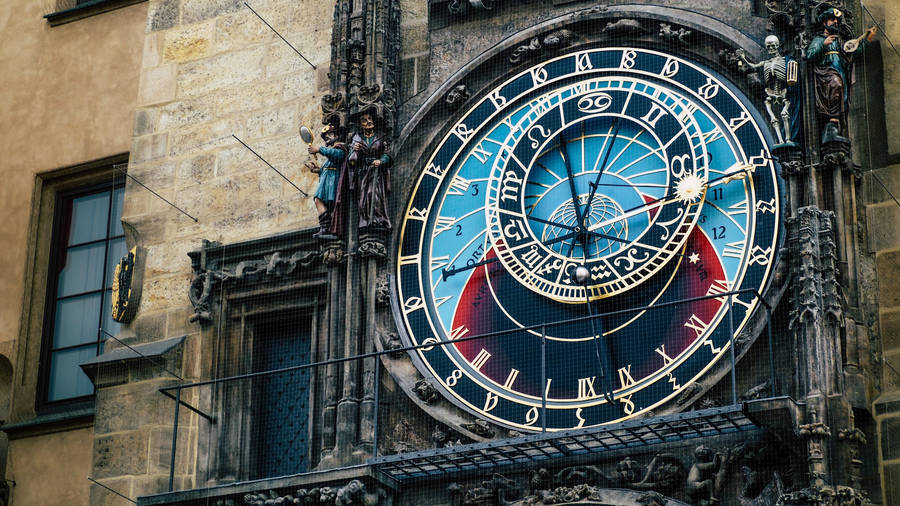
Somewhere during the show, she leaned over and whispered that the big illustration on the stage floor was actually a reproduction of a famous astrological clock in the Old Town Square in Prague.

And from further away:


That's one of the things I like about the Revels productions. Their attention to detail. I never would have known the image on the stage was more than just something pretty had my friend not mentioned its significance, yet there it was, another bit of historical detail - which they later made come alive on stage, actually, in an esoteric sketch about the complexities of time.

The players for this year's production are headed up by Eric Stern (the town mayor and clock maker, who plays a mean accordion), Burl Ross (who plays Hodiny, the clock maker's assistant, a charming comic with the chops of an old time European circus clown) and Ithica Tell (the  Empress - stately, full of presence, and plays a great straight man to Ross' clown).

photo by david kinder

Some favorite moments. Let's see. There was a beautiful couple songs back to back: Što Mi e Milo (Macedonian) and Shen Khar Venakhi (Georgian) - amazing harmonies that made me close my eyes involuntarily. The first was sung by all women, and the richness of the harmony was surprising. The second brought in the men, too - slower, softer, almost mournful, which is interesting as this medieval hymn to the Virgin Mary is apparently often sung at weddings in honor of the bride.

Some of the music in the Revels is historical and some is newly composed, and I have to say, I may be a layman when it comes to the tunes of Old Europe, but to my uneducated ears, the new stuff sounded as authentic as the old stuff. I particularly loved Jaschkele (with a Russian feel) and Rachenitsa (in Bulgarian style - and in 7/8 time), both composed by the town mayor, Eric Stern.

Another favorite moment: Nevijska Koleda (from Croatia) - a gorgeous song that started with all men's voices, then a wash of women's voices coming in, a beautiful, pure sound, a cappella, building and building until I had to close my eyes again.

And Dragana I Slaveya, which is (as I read in the program) a fiendish story about a nightingale and a girl having a singing contest. If the girl loses, the nightingale gets to cut off her hair. If the bird loses, the girl gets to cut off his wings. [!] But what beautiful music for such a creepy tale - a sort of call and response that then folds in together, a tune that twirls and hovers around one note like a hummingbird.

I love that the Revels gives me the opportunity to hear music I never would have had the chance to otherwise. Live, in that beautiful space with great acoustics. One other note: we had a third member of our party that night, a boy around... [I have no sense of age in people.] ten? I wondered if he'd be as engaged as the grown-ups with this performance of old, traditional music. Luke laughed and laughed at all the comedy throughout and had a great time.

You can check out more info on the Christmas Revels here.

ulterior motives

Ten years ago today, I wrote an e-mail to an artist I didn't know.

Hi--I'm a member of the Rufus Wainwright message board. In which I go by circusgirl. Anyway, I was in Portland recently on a visit and made it a point to stop by the Froelick [Gallery] and see your exhibit.


Big Venus - Stephen O'Donnell
Wow. I just wanted to say you're quite a talent, in both aesthetic and content. I really enjoyed your pieces in person. When I peeked at the Big Venus on the website I thought it was done in oils. I think my favorite pieces are the Castor and Pollox and the Toilette of Medusa (hope I'm not mis-stating the titles). The Medusa I love for so many reasons. It's so beautiful, but the idea behind it, the significance, just goes in so many layers. If I'm not being unclear. I love the paradoxes--the mythos/mythos, man/woman, good/evil, ugliness/beauty. Very cool. Castor and Pollux I thought was just so pretty and poignant. But I liked them all. Forgive me for sounding silly, but I just left impressed enough to feel the need to call upon you and gush a little.

*

Yes, that's what I said. The Rufus Wainwright message board. I'm not going to tell you just how much time I spent on that message board goo-gooing over Rufus Wainwright, and I'm not going to tell you how embarrassingly old I was when I was doing this.

[Thirty-five.]

In my defense, the artist I was writing to that day was also a member. Steveo, he called himself. Also in my defense, being in the circus can be kind of like being in jail. A jail full of big tops and cotton candy and the laughing, happy faces of children. I'm not knocking the children. It's just that when your life is nothing but big tops and cotton candy, when everyone around you [and most of all your husband the clown] thinks about nothing but big tops and cotton candy, you get stir crazy. And when you find something you like, you grab on and hold a little too hard.


Rufus Wainwright - Detail - Stephen, O'Donnell

It was on that message board that member Circusgirl had heard member Steveo mention that non-member Rufus happened to be playing a gig in Portland, Oregon, right around the time of the opening of his (member Steveo's) art exhibit Mythos at Froelick Gallery. Steveo kind of hoped Rufus would see the exhibit while in town, but the one who saw it was Circusgirl.

I've never been a big writer of fan letters. Well, there was that one time I wrote to Steven Spielberg when I was about thirteen, but that was less about the fan letter and more about my aspirations for submitting my script for the sequel to the film E. T. Which I also hoped to star in.

Well, and there was that time, even earlier, when I wrote to Sally Struthers to tell her how much I admired her acting and her crusading for animal rights, but that time I wrote the fan letter because my cousin told me she wrote one, and I wanted to be just like my cousin.

I'd say most fan letters have ulterior motives. We want to tell the artists, writers, actors, activists that we love what they've done, but we also want other things. An autograph. To feel smart. To congratulate ourselves on our taste. To feel a connection to our heroes.

The day I wrote the fan message to artist Stephen O'Donnell, I had ulterior motives. Like that one about feeling smart. Witness the incredibly thought-out [but decidedly awkward] wording of my note. You're quite a talent in both aesthetic and content

Yeah.

I also wanted to find someone to talk about art with. I really did think that somehow this accomplished artist would find my comments so engaging that we might strike up a conversation and then I could talk about lovely things like beauty, symmetry, iconography. Motif. Impasto. Chiaroscuro. Whatever that was. Anything, as long as it wasn't big tops and cotton candy.

I also hoped we could talk about Rufus Wainwright. Because, at age thirty-five, I was, in fact, a thirteen year old girl.

And if I'm honest with myself, I'll say I wanted something more. A human connection that I hadn't had in a very long time, out there on the road with all that nothing but cotton candy. A human connection that maybe even held a hint of that tiny, hidden desire I felt while standing in front of those beautiful self portraits of that man in a dress.

The Toilette of Medusa - Stephen O'Donnell

A hint. I didn't need more. Just a quick, innocent fan letter was enough.

My list of ulterior motives was pretty long that day, but it didn't include starting up a quick e-mail conversation that would lead to a longer e-mail conversation that would lead to a deep friendship that would lead to my finding the guts to leave my fifteen year marriage and career and move to Portland to meet and get to know and eventually marry that artist.

But in the afternoon of the day I sent that message, Stephen wrote back.

Monday, November 25, 2013

the gods of second chances: the front cover


I'm excited to unveil the cover art for Dan Berne's upcoming novel, The Gods of Second Chances, which will be published in March by Forest Avenue Press.

Sometimes with a project like this, I have to do a lot of noodling before I come up with something I like. With Dan's book, I just mused on the story, the characters, the lovely straight-forward voice of the novel's narrator, Alaskan fisherman Ray Bancroft, and the idea popped into my head pretty much fully formed.

Granted there was definitely tinkering. To lay out my geometrical school of salmon so that it didn't overwhelm the author's name or crowd the title. To design a fish I really liked. There was lots of fish tinkering...

In the end, I went with a simple fish, which I thought would work best with the geometrical design of the school. One with lots of red to stand out sharply against the background blue.
The art I'm referencing here - even down to the colors I chose - is Tlingit. The Tlingit are an indigenous people of the Pacific Northwest, particularly of the southeast coast of Alaska. Their art, and that of other indigenous peoples like the Haida, symbolize the Pacific Northwest, and Tlingit culture figures in The Gods of Second Chances. There's some really cool info on the Tlingit culture here. From all I've read, Tlingit art seems to represent the connection between man and the greater world - nature, the cosmos, the sacred. It's intimidating to reference an art style from a culture that's not my own, but I hope I've done justice to it. And to Dan Berne's book, which, along its page-turner of a plotline, explores the many different meanings of sacred, whether in the vastness of the ocean or the crowd of ceramic gods on Ray's kitchen counter or the complexities of family.

More information about Forest Avenue Press is here.

And more about The Gods of Second Chances and Dan Berne is here.

Some good information and pictures of Tlingit art can be found here.

Sunday, November 17, 2013

a moment in the day: grocery store


As Stephen and I come to the top of the supermarket escalator and step off, an old man is right there, shuffling onto the top step of the down escalator with a small paper grocery bag and a cane. Very slow and very unsteady. Starting down, he sags into the side, balanced against the moving handrail.

Then tips backward.

Then he's gone behind the thick steel armature of the escalator. Behind me, Stephen's voice does a little barrage of, "Oh, oh, oh!"

Now I'm hurrying down the moving steps and the old man's laid out on his back below me, sprawled, carried along toward the bottom. I don't know what to do. I stop stupid in the middle of the escalator. The way he's lying there, his head toward me, both of us moving, I feel more like someone who might hurt him than someone who might help him up.

From behind and above me comes a young woman, smaller than me, long black hair, wearing a Fred Meyer badge. I do the first smart thing I've done since this started. I get out of the way.

She goes past me and down to the man, crouching over him. His cane clunks along beside them. It's painted in big random swaths of bright color. I try to at least retrieve the cane but I can't reach it. They come to a stop at the bottom, bag and cane a clatter onto the floor. Together, they start to rise, slowly, slowly, the woman asking if he's OK, her hand on his arm, lifting him, and suddenly I'm at the bottom and there's nowhere for me to go but right into them. I start back-stepping.

She's helping him up, getting the job done, and I'm an idiot on an escalator, running in place, backward, in slow motion, trying to keep from knocking them both back down.

I do this for what seems like a very long time.

Then it's over. He's shuffling off toward the parking lot and she's stepping back so I can get my feet on the ground.

She smiles at me. "That's so scary," she says. She looks very young. East Indian, with a faint orange dot in the center of her brow. "Last week my boss fell down those steps." Chatting away as we ride together, back to the top.

My body feels like a sandcastle after the tide's washed in. But I did my good deed for the day. I kept out of the way.