Monday, April 22, 2013

clybourne park


Good theater should be a conversation starter. I’ve always loved the live experience of theater, the laughter of a full audience, the sets, the way actors bring life to a story—but I really love it when, after Stephen and I have enjoyed a play, we leave the theater in deep conversation over the themes and issues brought up. I’ve noticed lately that Portland Center Stage in particular seems to choose their plays with the aim of initiating a dialogue. In fact, after Friday night’s production of Bruce Norris’ Clybourne Park, we and the rest of the audience were invited to stay in the theater for a Q&A with some of the actors. And the same open dialogue is offered after almost every performance of the play down at the Gerding Theater. How cool is that?

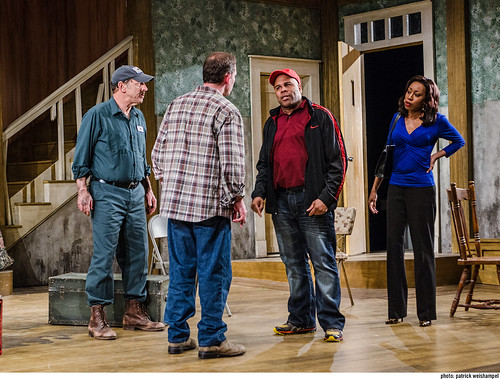
Those who stayed behind for the Q&A had plenty to talk about. The Pulitzer Prize winning Clybourne Park is that kind of play. It's a re-imagining of Lorraine Hansberry's A Raisin in the Sun, told from the outside in. In A Raisin in the Sun, a black family buys a house in a Chicago neighborhood that happens to be predominantly white. In Clybourne Park, the same happens, but the family we meet is the white family, still in the process of selling their house but already packing and getting ready to leave. The action in the first half concerns the argument, at times hesitant, at times heated, between the family and members of the community over whether this sale to a black family should be allowed to go through. The second half takes us fifty years down the line to examine the subjects of prejudice and ownership from yet another angle. The Clybourne Park neighborhood has gone from predominantly white to predominantly black to that period of flux called gentrification, and this same house has been bought by a white family hoping to tear it down and build something bigger and grander in its place. The resulting debate slash battle, which includes the great niece / namesake of Lorraine Hansberry's original Lena Younger character, highlights not only how incredibly difficult it is to kick prejudice out of our souls, but also how feeble and muddled our attempts to communicate about it usually are.


We talk around it. We talk over and under it. We're afraid to offend and are afraid to find out just how deep our own prejudices might go. A question this play seems to ask is, what kind of racist are you? I'll tell you the kind I am. Not necessarily the same kind as the character Lindsey (Kelley Curran) who, at one point, blurts, "Half my friends are black!" and at another, "I even dated a black guy!" - but similar. With me, there's something inside that makes me automatically like a person more for being black, for being any minority. This is both an instinct and a half-conscious decision. For example, looking at the cast list, wanting to pull a couple standouts from the lineup to talk about in my little review here - which was a difficult task as every actor in this play was, to me, a standout - I found myself thinking first of Sharonlee McLean (white), who is both hysterical and heart-breaking in her roles, who perfectly exemplifies the overcompensation that I feel in my own reactions to race - but I found myself stopping and changing tack. I would talk about Sharonlee, yes, but first I would talk about Kevin R. Free (black), who in one of his roles portrays the affable Kevin with a beautiful just-below-the-surface pain and anger that the character doesn't want to face. It's a nuanced performance that gauges the way you feel as you watch the show - and, in a way, lets you know when you can be comfortable even in the midst of the rising tension - and when you can't.
But you see what happened? I wanted to talk about both actors but, because he's black, my brain wanted to put Kevin R. Free first.

Driving home with Stephen after the play, I tried to talk about this tendency of mine but kept falling all over my words. And I realized that I was doing what all the characters in Clybourne Park were doing throughout much of the show. Hedging and hesitating, being stymied by the weight of the topic. And that was one of the most fascinating things to me about the evening. Because beyond the heated subjects of prejudice and gentrification, Clybourne Park is a play about communication and the ways and reasons in which we avoid it.

I should also say that  for a play with such serious and tension-filled subjects, it's uproariously funny.  Even as I was deep in thought over all the issues that arose during the production, I was laughing my head off. Clybourne Park is a top-notch play with sharp, wonderful writing, and Portland Center Stage made beautiful work of it.

It's playing now through May 5th at the Gerding Theater in the (quite gentrified) Pearl district. More info is here.

Sunday, March 17, 2013

essay

Try to write an essay. Think about your past. Try to make connections between the person you are now and the person you were then, but the person you were then is lost inside the blind blank of your memory.

Read your diary. Try to find the part of your past that will serve the essay you're trying to write.

Get lost. Get cushy in the lostness of all the details behind the blind blank of your memory.

You're sixteen. You just got a haircut and a perm. You're bursting with the bigness of your life.

A direct quote, errors intact:

I'm getting my braces off, on Tuesday. Noni and Coco are here, but they're going to be going home to the Summit before Tuesday. Noni loves my hair. She says I look like a cross between Brooke Shields and Audry Hepburn. I wonder what Audry Hepburn looks like.

the whipping man


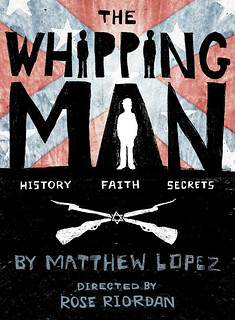
I was captivated even before The Whipping Man started last night at the Gerding Theater.


Down across the darkened stage, in the little arched window over the front door of the DeLeon house, I could already see the rain. A hint of glitter across the glass. I felt smart for noticing - and then wondered if they'd "turned on" the rain this early just to give people something to feel smart for noticing. As it turned out, the rain was an almost constant element in Portland Center Stage's production of The Whipping Man, a perfect constant, reminding me of the harshness of the world and the fragile safety of home but also helping create the intense crucible that this particular home was intended to be.


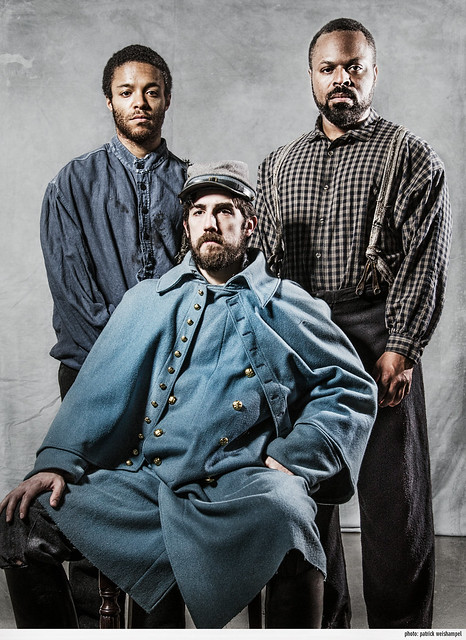
The rain also reminded me of the Noah flood story. And the plagues of Egypt during the Exodus. Because this play, which takes place just following the South's surrender at the end of the Civil War, concerns two former slaves and one former master, all who follow the Jewish faith. Caleb DeLeon, a Confederate soldier, returns home, wounded and in agony, on the eve of the Passover. The only folks left in the house are Simon and John, two former slaves, newly liberated and still coming to terms with their freedom as well as their past. The end of slavery seen through the prism of the Jewish faith is great irony, of course, as illustrated perfectly when former slave Simon [Gavin Gregory] officiates the DeLeon Passover Seder by singing:

Go down, Moses, way down in Egypt's land, tell old Pharaoh, let my people go.

It's really thought-provoking stuff, but the Jewish-slave connection isn't the entire heart of the story. There are also loads of secrets and loads of tension between these three complex, fully-realized characters. I thought the acting was superb. I last saw Gavin Gregory in the campy musical The 25th Annual Putnam County Spelling Bee, and I'm amazed at how beautifully differently he played the two parts. Carter Hudson as wounded soldier Caleb is a master at portraying pain, both mental and physical, and Christopher Livingston gives the young John a great mix of bitterness and humor.

The set is magnificent. The beautiful ruin of an antebellum home - so finely detailed and so realistic, at least to my layman's eye. Shadow and rain and evocative lighting direction make it even better.


As a pretty staunch atheist with a fascination for the Bible, I had an interesting reaction during the Seder that played out in the second half of the production. During the first act, Simon tells Caleb you can't be a fair-weather friend to God. I don't remember how he actually puts it, but that's the basic idea. Caleb has lost his faith on the battlefield, says he searched for God, besought God, and God wasn't there. Knowing [even on a small scale] what the soldiers of the Civil War went through, what the slaves of the South went through, it seems almost laughable that Simon would defend a faith in any god. But for just a moment, later, during that Seder, I believed him.

Not that there was a God - I didn't suddenly believe that God is a real thing - but just as you can have faith in a fictional character you read in a book or watch on stage, I had a sudden faith that the God of the world of The Whipping Man did exist there. I can't even remember today what specific bit of story, what bit of dialogue provoked the reaction in me. I just know that it hit me so unexpectedly that I nearly missed one of the big surprises in the play [a surprise that would eventually lead to what was, for me, one of the most satisfying endings in any play I've seen] because I was busy having whatever is the opposite of a crisis of faith.

Maybe it was the Sazerac I drank at intermission.

But God was somewhere in there.


The Whipping Man is still playing at Portland Center Stage - but only through March 23. You can check it out here.

Friday, March 15, 2013

A moment in the day: moving


I sit at my new desk, facing my new wall. It's a dry erase board. Someone put my name on it, my name and an arrow, for the computer guy so he'd know where to move my computer when he got me all set up in here, my temporary workspace while they gut and remodel the Marketing Department. About half the Marketing team is in here, organized in a close ring around the inner wall of the conference room. Now that I'm all moved in and the computer is up and running, I could erase my name from the whiteboard but I don't.

That impulse to make a home.

When I moved into Powell's Industrial Warehouse a year ago, I brought with me as much as I could of my old desk: my tape dispenser, my cubicle decorations, my sock monkeys.


This afternoon as I packed it all up, my supervisor ducked under my desk to pull my computer out. He pointed at the small wooden box the computer sat on.

"Does it matter to you whether you keep that or not?" he said.

I didn't know what purpose it served.

"Yes," I said.

Now, and for the next three weeks, maybe a month, this whiteboard is mine. And those dry erase markers, the blue one, the orange one, the two red ones, those are mine. I'll probably never write anything on the whiteboard but I could if I wanted to.

I arrange my desk. I arrange my snowflake. I didn't want to throw away the tiny snowflakes Lenore and I stamped out of paper back before the holidays. Three sat on my desk all winter - then two when one disappeared. No real reason to keep them there - just that at first they were cute and then they were mine. It's spring and there's no need for paper snowflakes, but when I tossed one in recycling this afternoon - a tiny flick of paper into the bucket - it hurt to let it go.

Gently, I place my last snowflake on my new desk next to the lamp that I never turn on. Behind me, coming in through the open door of the conference room is the chug-chug of the warehouse and the sound of the Rolling Stones.

Thursday, March 14, 2013

forest avenue press's first fiction acquisition


I'm excited to jump on Forest Avenue Press' announcement today that their first work of fiction will be A Simplified Map of the Real World by Stevan Allred.

I don't know that I can say it better than they do:

"Fifteen linked stories, in the tradition of Olive Kitteridge, investigate the lives of neighbors, brothers, ex-wives, errant sons, former classmates, and the occasional stripper, revealing the complex connections and miscommunications that intensify small-town life."

This collection is full of heartbreak and humor, and one of the things I love about it, beyond getting to wonder, as I read from story to story, which characters I'm going to meet up with again and in what new and interesting ways ... uh-oh, I just got so excited I got lost in my own sentence ... but one of the things I love is how fully realized his fictional town of Renata, Oregon, is. How deeply I come to know this place.

Those in the Portland writing community know Stevan Allred as the co-teacher (along with Joanna Rose) of the well-known Pinewood Table critique group. You can find them on facebook here. To the right is the man, himself. I had to steal this photo of Stevan off of Forest Avenue Press' website because of the natty tie.

As graphic designer for FAP, I've been working closely with them on the look and feel of the inside of the book - and having a great time working on my cover design. We won't be revealing the cover for a while, but I do want to say what a pleasure it's been getting to know this book so intimately as I figure out just what imagery / typography / layout / design should become the face it gives to the world.

A Simplified Map of the Real World will be out in September, launching ceremoniously on Thursday, September 12th, with a reading at Powell's City of Books. There are more acquisitions to come. FAP is currently mulling the many amazing submissions they've received in their recent call for quiet novels. Check out more info about the press and about Stevan Allred's upcoming book, on the Forest Avenue Press website here.

Thursday, February 28, 2013

first


A writer friend of mine, Zach Ellis, is in the middle of experiencing his first acceptance of a piece of his writing. Not only does he get the thrill that brings, but today he gets to read his piece in a big event at the Centre for Contemporary Arts.

In Glasgow.

Scotland.


He lives here in Portland. When he entered the writing contest, he joked that if he were chosen, maybe he'd make the trip out - and when he was chosen, his friends and his writing community got together to send him there. He's been all over Glasgow, soaking in the culture and scenery, going to museums, and is just four hours away from the big event when he'll read his piece - which you can read an excerpt from here.

[Update: you can listen to the podcast of Zach Ellis' reading, and the rest of the LGBT In Our Own Words event here.]

Following his adventures has gotten me thinking about first publications and how many different ways those experiences can be special. Mine was just four years ago, a short story in the book Portland Noir - and the experience was huge. Alright, I didn't get to go overseas, but I got to sign copies at a packed reading at Powell's City of Books. Got to dress up noir-style in a vintage dress [and crazy lovely vintage hairstyle whipped up by Stephen] and read at a super cool lit event at the Blue Monk. Got to watch the book sit on the Powell's bestseller list for weeks and weeks and weeks. It was the perfect experience for a first publication.

Granted, there was that other time back in 1997. My first picture book, Wright Vs. Wrong. But I didn't used to count that one because the book was put together by what I thought back then must be the smallest publisher ever - and my experience that time around was mostly me wandering through bookstores all across the country and never seeing a copy.

And there was the time back in 1992 or thereabouts when I sold an idea to Gibson Greeting Cards. When I got the acceptance letter I tried to count that as my first publication, but a greeting card is kind of a stretch when you're trying to call yourself a writer, especially when it contains only like ten words. And you never see a copy and seriously have a hunch that they never printed it and the president of Gibson might have accepted your idea just to be nice since he knows your husband.

And there was the time back in, oh, 1984ish when my poem was accepted for publication in the very prestigious American Poetry Anthology - accepted only on the condition that I shell out forty bucks for a copy.

Which I did. 

No, I don't count that one either. I do count the picture book, now, though. Getting other, bigger publications has somehow given me a better chance to appreciate that, small as it was, yes, Wright Vs. Wrong counted - and was a sweet, lovely experience for me. Also knowing more about small presses and micro-presses, knowing about things like chapbooks and online journals and reading events and all the myriad ways a writer can have his or her work recognized and enjoyed - I appreciate those early experiences all the more.

That's my story about my first publication[s]. What's yours? Pop over to the comments section and give it to me.

Friday, February 15, 2013

gods and foolish grandeur


People who know me won't be surprised to find that if I were going to build myself a husband, I'd start with Joan Crawford. I mean the glamorous Joan, not the whole Mommie Dearest thing.


But would I start with young Joan?


Or older Joan?


In putting together this year's Valentine's Day card for Stephen, I went with both. My main image was the early Joan with the heart-shaped hat. I so wish I knew where that lovely photo came from and exactly what year it is. After a long while of looking through pictures of Stephen as Madeleine Prèvert, I found one that seemed to match, angle-wise and lighting-wise, and tipped the face in over Joan's.

But he looked a little sad. Plus, I wasn't completely happy with Joan's hair. Maybe he wasn't either. Which is where the photo of older Joan comes in.

I got a nice, smooth bit of hair from photo number two and then Photoshopped young Joan's mouth back in, plus some shadow along the face from the hat and various tweaks to make it look its best. I wanted the card to be reminiscent of fashion ads from the twenties, so I took the image into Illustrator to finish it off. I love the way a lot of the photos in those old ads are framed.


In his Valentine's Day card to me, Stephen's creativity came from a very different place. I don't have any in-progress versions to show off all the intricate Photoshop work he had to do on his, so I'll just give it to you as I saw it. 

The envelope.


The outside.


Um, whoa.


And a detail on the inside.

Stephen as Hercules.

By way of I Love Lucy.

Plus, as he's pointed out, he kind of looks like Mandy Patinkin from Sunday in the Park with George.

Greek god or Hollywood goddess, lovely or wacky, that's my husband.